Es ist allseits bekannt, dass Mundatmung für unseren Organismus gesünder ist als Nasenatmung. Insbesondere im Winter, wenn die Außentemperatur sinkt, spüren wir, dass die Lunge beim Mundatmen kühler wird, als wenn die Luft den längeren und engeren Weg über die Nase nimmt und unterwegs noch für den sprichwörtlich „kühlen Kopf“ sorgt.
Wer sich einigermaßen „im Griff“ hat, kann das im Normalfall tagsüber auch steuern und schrittweise zur Gewohnheit werden lassen,- wenn nicht organische Beeinträchtigungen dies verhindern.
Aber was ist mit nachts?
Da schnarchen, pfeifen, röcheln wir geräuschvoll und aus voller Kehle durch den Mund. Das ist nicht nur eine gesundheitliche Belastung für uns selbst, sondern auch ein emotionaler Stress für diejenigen, die versuchen, neben uns zur Ruhe zu kommen.
Unsere Oma schnarchte fürchterlich und es war für uns Kinder eine Quälerei, wenn wir bei ihr zu Besuch waren und im großen Bett neben ihr einzuschlafen versuchten. Dann schon lieber aufs schmale Sofa im Wohnzimmer ausweichen.
Viele leiden obendrein noch unter diesen berüchtigten Atemaussetzern, – Schlafapnoe, kann auf lange Sicht nicht nur schädlich für das Herz sein, sondern auch zu Beeinträchtigungen im Alltag führen.
Wer alleine schläft, weiß in der Regel nicht, was nachts „so los ist“.
Daher habe ich mir vor einigen Monaten eine Schlaf-App heruntergeladen und mehrere Nächte „gecheckt“. Im Grunde genommen war es nichts anderes als eine Tonaufnahme der Atemgeräusche…. Es war ziemlich ernüchternd…. Mehr als 90% der Zeit: MUNDATMUNG… teils geräuschvoll.
War ich deshalb morgens oft „wie gerädert“?
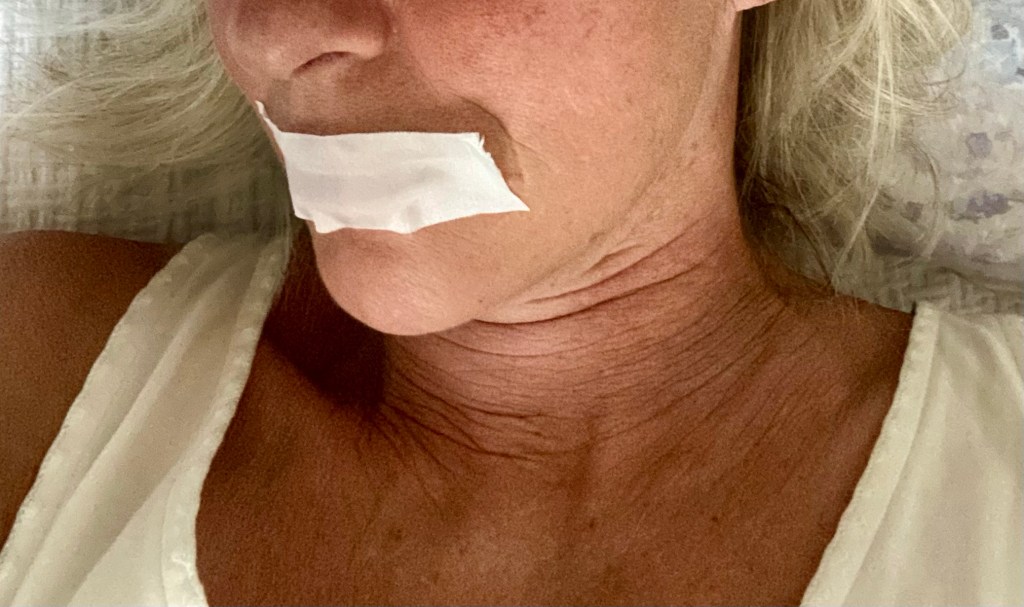
Seit 3 Monaten klebe ich mir beim Lichtausmachen den Mund zu, nachdem eine befreundete Opernsängerin erzählt hatte, dass sie das schon länger erfolgreich praktiziert.
WHAT?
Mein erster Impuls war: das geht nicht!
Ich werde ersticken!
Ich sterbe in der Nacht!
Oder ich habe klaustrophobische Beklemmungen!Das tut morgens weh, weil die Lippen so empfindlich sind!
Es war einiger Anlauf nötig. Beispielsweise, dass an beiden Seiten des Mundes das Pflaster ein wenig abstand, damit ich es im Schlaf würde abziehen können.
Und das ist am Anfang auch passiert: morgens war das Pflaster weg.
Dass Pflaster und Schere schon auf meinem Kopfkissen liegen, wenn ich schlafen gehe, hat sich auch als hilfreich erwiesen
Mittlerweile schlafe ich entspannt damit durch und ziehe es beim Aufwachen ab. Kann gut sein, dass dadurch noch nebenbei die Durchblutung der Lippen gefördert wird.
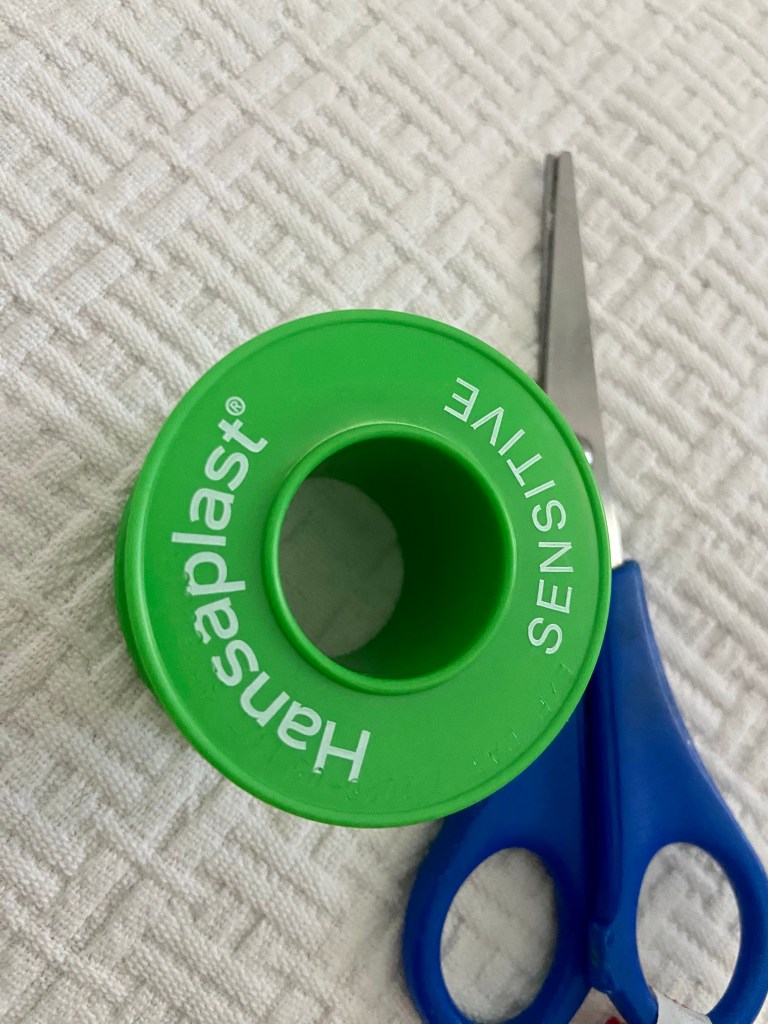
Es ist darauf zu achten, ein Pflaster für empfindliche Haut zu verwenden.
Ich nehme derzeit das auf dem Foto abgebildete.
… und brauche weniger Schlaf und die Nase ist auch tagsüber frei.
Wie das in der Erkältungssaison oder etwa mit Lippenherpes gehen kann, wird sich noch zeigen.
Ich werde berichten.
Lasst mir gern eure Erfahrungen, Berichte und ähnliches da.

*******
SHUT UP

It is well known that breathing through the mouth is healthier for our organism than breathing through the nose. Especially in winter, when the outside temperature drops, we feel that the lungs get cooler when breathing through the mouth than when the air takes the longer and narrower route through the nose and still literally ensures a “cool head” on the way.

Normally we also can control this during the day and gradually make it a habit, unless physical impairments prevent this.

But what about at night?

We snore, whistle, rattle loudly through our mouths. This is not only a health drain on ourselves, but also an emotional drain on those trying to relax next to us.

Our grandmother snored terribly and it was torture for us children when we visited her and tried to fall asleep in the big bed next to her. Then it was better to switch to the narrow sofa in the living room.
Many of us also suffer from those notorious breathing pauses - sleep apnea can not only be harmful to the heart in the long run, but also lead to impairments in everyday life.
Those who sleep alone usually don't know what "is going on" at night.
That's why I downloaded a sleep app a few months ago and "checked" it for several nights. Basically, it was nothing more than an audio recording of the sounds of breathing…. It was pretty sobering... More than 90% of the time: MOUTH BREATHING... sometimes noisy.
Was that why I was often "wrecked" in the morning?
For the past 3 months, I've taped my mouth shut when I turn off the light, after an opera singer friend of mine said that she had been doing this successfully for a long time.

WHAT? My first impulse was: that doesn't work! I'm going to suffocate! I die in the night! Or I have claustrophobic anxiety! It hurts in the morning because my lips are so sensitive!

It took some effort. For example, the tape on each side of the mouth was a little bit apart so that I could take it off in my sleep.

And that's what happened at the beginning: in the morning the plaster was gone.
The fact that band-aids and scissors are already on my pillow when I go to sleep has also proven to be helpful
Now I sleep relaxed and take it off when I wake up. It may well be that this also promotes blood circulation in the lips.

Care should be taken to use a plaster for sensitive skin.
I am currently using the one shown in the photo.

….and need less sleep and the nose is also clear during the day.
It remains to be seen how this can work in the cold season or with cold sores.
I will report.
Please let me know your experiences and/ or reports.
 Motion & Balance. Susanna Abendroth